Commercial or Residential: Better Returns?
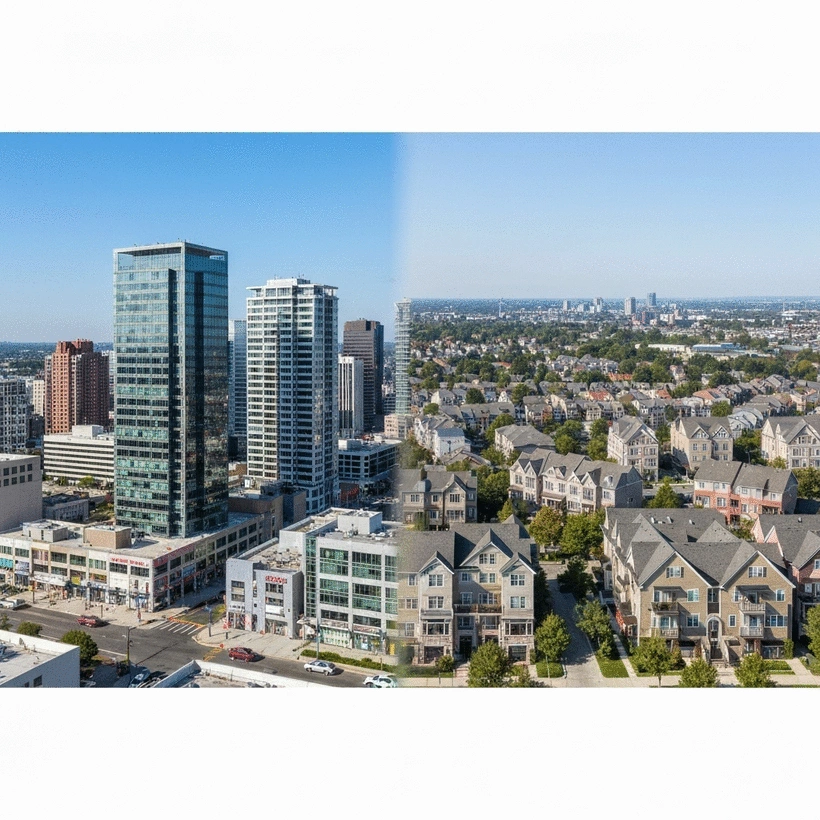
Are you ready to navigate the dynamic world of urban real estate investments? Understanding the key differences and current trends can significantly impact your investment decisions and financial success.
What You Will Learn
- Key Differences: Understand the distinctions between commercial and residential real estate, including investment purposes and lease durations.
- Current Trends: Learn about significant market trends, such as the rise of remote work and suburban migration, affecting urban investments.
- Economic Indicators: Identify crucial metrics like population growth and employment rates that signal investment opportunities.
- Investment Strategies: Explore different paths, including commercial, residential, or a hybrid approach, to align with your financial goals.
Urban Real Estate Investment Comparison
This visual compares key distinctions and considerations between Commercial and Residential Real Estate, highlighting investment purposes, lease durations, and market sensitivities.
Commercial Real Estate
Properties for business use (offices, retail, warehouses).
-
✓
Investment Purpose: Generate income via business leases.
-
✓
Lease Durations: Longer (3-10 years), stable income.
-
✓
Market Sensitivity: More sensitive to economic downturns (vacancies can rise).
Residential Real Estate
Properties for living (homes, apartments).
-
✓
Investment Purpose: Personal use or rental income.
-
✓
Lease Durations: Shorter (typically one year).
-
✓
Market Sensitivity: Often maintains demand in tough economies (defensive stability).
Key Investment Considerations
-
➜
Investment Goals: Cash flow vs. long-term appreciation.
-
➜
Market Dynamics: Understand demand shifts and economic factors.
-
➜
Risk Tolerance: Commercial may offer higher returns but greater risk.
Urban Market Economic Indicators
-
📈
Population Growth: Indicates demand for spaces.
-
📈
Employment Rates: Correlates with stronger markets.
-
📈
Property Value Trends: Helps identify up-and-coming areas.
Understanding the Landscape of Urban Real Estate Investments
Diving into urban real estate investments can be intriguing yet overwhelming. As an urban professional or aspiring investor, it’s essential to understand the distinct categories within this field. The primary distinction lies between commercial and residential real estate. Each serves different purposes and appeals to various investor strategies.
Commercial real estate encompasses properties used for business purposes, such as office buildings, retail spaces, and warehouses. On the other hand, residential real estate includes homes and apartments primarily meant for living. Both sectors offer unique opportunities and challenges that I’ve witnessed firsthand through my experiences at Urban Property Insights.
Defining Commercial vs. Residential Real Estate
Let’s break down some key differences between the two types:
- Investment Purpose: Commercial properties are often purchased to generate income through leasing to businesses, while residential properties are typically bought for either personal use or rental income.
- Lease Durations: Commercial leases tend to be longer, often ranging from three to ten years, which can provide a stable income stream. In contrast, residential leases are usually shorter, often one year.
- Market Sensitivity: Commercial real estate can be more sensitive to economic downturns; when businesses shrink, vacancies can rise. Residential properties, however, often maintain demand even in tough economies, offering a level of defensive stability.
Understanding these differences is vital for making informed decisions. It sets the foundation for assessing potential investments and their respective risks and returns.
Current Market Trends in Urban Real Estate
As I analyze the urban real estate landscape, several trends have emerged that are shaping the market today. For instance, the rise of remote work has significantly influenced both commercial and residential sectors.
- Increased Demand for Flexible Spaces: Many companies are looking for adaptable office environments that can accommodate various working styles.
- Suburban Migration: Due to the flexibility of remote work, many residents are relocating from urban centers to suburban areas, seeking more space and affordability.
- Smart City Developments: Urban areas are increasingly focusing on sustainability and technology integration, enhancing the livability and appeal of metropolitan investment opportunities.
These trends not only reflect changing preferences but also highlight the importance of staying informed about market dynamics. For urban professionals and investors, understanding these shifts can lead to strategic advantages and better investment choices.
Analyzing Urban Markets: Key Economic Indicators
To effectively analyze urban markets, it’s crucial to consider several economic indicators that signal opportunities or risks. Here are some key metrics I always review:
- Population Growth: A growing population often indicates increased demand for housing and commercial spaces. For more insights on population data and its impact on real estate, refer to resources from the U.S. Census Bureau.
- Employment Rates: Higher employment rates in urban areas typically correlate with stronger real estate markets, as people seek housing close to their jobs. Data on employment trends can be found through the Bureau of Labor Statistics.
- Property Value Trends: Tracking how property values have changed over time in specific neighborhoods can help identify up-and-coming investment areas. Professional associations like the National Association of Realtors often provide valuable reports on property value trends.
Monitoring these indicators helps formulate a comprehensive view of a market’s potential. By staying attuned to economic shifts, I empower my readers at Urban Property Insights to navigate the urban investment landscape with confidence.
Pro Tip
When investing in urban real estate, always consider the long-term implications of your investment. For instance, the flexibility of remote work has led to a surge in demand for suburban properties. Analyzing trends can help you identify which areas are likely to appreciate in value over time, allowing you to make more strategic decisions that align with your financial goals.
Summarizing Key Takeaways: Commercial vs. Residential Real Estate
When considering an investment in urban real estate, it's crucial to understand the key differences between commercial and residential properties. Each category offers unique opportunities and challenges that can significantly impact your investment strategy. I've seen firsthand how these distinctions can influence both financial growth and lifestyle choices. Let's break down what you need to consider!
In summary, here are some points to keep in mind:
- Investment Goals: Are you seeking steady cash flow or long-term appreciation?
- Market Dynamics: Understand the trends impacting each sector, such as demand shifts and economic factors.
- Risk Tolerance: Commercial properties may offer higher returns but often come with greater risk compared to residential options.
Ultimately, the right investment path depends on your financial goals and risk appetite. For urban professionals and aspiring investors, aligning your choices with your lifestyle preferences is equally important. I always encourage my readers to reflect on what suits their personal and financial situation best!
What Investment Path is Right for You?
Choosing between commercial and residential real estate can feel overwhelming, but it doesn't have to be! First, consider your investment objectives. Do you prefer active management, which typically comes with commercial properties, or would you rather enjoy the relative simplicity of residential rentals? Understanding these nuances will help guide your decisions.
- Commercial Real Estate: Best for investors looking for higher returns and long-term leases.
- Residential Real Estate: Ideal for those seeking stable cash flow and lower entry barriers.
- Hybrid Approach: Some investors diversify by combining both property types to balance risk and reward.
As you weigh your options, remember that ongoing education and market research are your best friends. Staying informed about the urban real estate landscape is essential for success!
Frequently Asked Questions (FAQs)
What is the main difference between commercial and residential real estate?
Commercial real estate is used for business purposes (offices, retail), primarily to generate income through business leases. Residential real estate is for living (homes, apartments), used either for personal use or rental income.
How do lease durations differ between commercial and residential properties?
Commercial leases are typically longer, often 3-10 years, providing stable income. Residential leases are usually shorter, commonly one year.
Which type of real estate is more sensitive to economic downturns?
Commercial real estate tends to be more sensitive to economic downturns, as business contractions can lead to increased vacancies. Residential properties often maintain demand even in tough economies.
What are some current market trends impacting urban real estate?
Current trends include increased demand for flexible office spaces due to remote work, suburban migration, and the development of smart cities focusing on sustainability and technology.
What economic indicators should I monitor for urban real estate investments?
Key indicators include population growth (indicating demand), employment rates (correlating with stronger markets), and property value trends (identifying up-and-coming areas).
Is a hybrid investment approach advisable?
Yes, a hybrid approach, combining both commercial and residential properties, can be an excellent way for investors to diversify and balance risk and reward.
Engage with Expert Insights and Resources
To navigate the complexities of urban real estate investment, engaging with expert insights is invaluable. At Urban Property Insights, we strive to provide resources that empower you to make informed decisions. Here are some ways to enhance your knowledge:
- Educational Webinars: Participate in sessions focused on market trends and investment strategies.
- Industry Reports: Access comprehensive analyses that break down current urban real estate dynamics.
- Networking Opportunities: Connect with other investors to share experiences and insights.
By leveraging these resources, you can make well-informed investment choices that align with your financial goals!
Accessing Tools for Real Estate Decision-Making
Investing in real estate requires the right tools to assess potential opportunities effectively. Whether it's property valuation software or market analysis platforms, having access to reliable tools can make a world of difference. Here are some essential tools to consider:
- Real Estate Analytics Platforms: Gain insights into market trends and property performance.
- Financial Calculators: Evaluate your potential returns and cash flow scenarios.
- Neighborhood Reports: Understand the demographic and economic factors influencing various urban areas.
Utilizing these resources enables you to make data-driven decisions that can enhance your investment outcomes!
Connecting with Financial Advisors for Tailored Strategies
Working with a knowledgeable financial advisor can significantly enhance your investment strategy. These professionals can help you navigate the intricacies of urban real estate, ensuring your approach aligns with your goals. Here’s why connecting with an advisor is a smart move:
- Customized Guidance: Advisors provide insights tailored to your unique financial situation.
- Risk Management: They help you identify and mitigate potential investment risks.
- Long-Term Planning: Advisors assist in creating a roadmap for achieving your financial goals in real estate.
Investing without expert guidance can be risky, so seek out professionals who specialize in urban real estate to leverage their expertise!
Exploring Real Estate Funds and REITs for Diversified Investment
If you're looking to diversify your urban real estate investments without the hassle of direct property management, consider real estate funds or REITs (Real Estate Investment Trusts). These options allow you to invest in a portfolio of properties, providing a range of benefits:
- Liquidity: Easily buy and sell shares compared to traditional real estate investments.
- Professional Management: Funds and REITs are managed by experts, reducing the workload for investors.
- Access to Different Markets: Invest in various sectors, including commercial, residential, and industrial properties.
Diving into funds or REITs can be an excellent way to broaden your investment horizons while mitigating risk. Explore these options to find the best fit for your investment style!
Recap of Key Points
Here is a quick recap of the important points discussed in the article:
- Investment Purpose: Understand the distinction between commercial properties for income generation and residential properties for personal use or rental income.
- Market Trends: Stay informed about trends such as remote work and suburban migration that are shaping urban real estate.
- Key Economic Indicators: Monitor population growth, employment rates, and property value trends to identify investment opportunities.
- Investment Goals: Define whether you're seeking cash flow, appreciation, or a hybrid approach.
- Leverage Resources: Utilize educational webinars, industry reports, and networking opportunities for informed decision-making.