Sun Belt vs. Coastal Cities Investment
As urban property markets evolve, understanding the underlying dynamics can be the key to investment success. Are you ready to explore how different regions can shape your financial future?
What You Will Learn
- The Sun Belt offers rapid population growth, making it attractive for investors seeking high returns.
- Coastal cities provide stability and long-term appreciation, appealing to those focused on wealth preservation.
- Understanding population migration trends is crucial for identifying lucrative investment opportunities.
- Income and job growth rates differ significantly between the two regions, affecting investment viability.
- Climate change impacts property values; coastal areas face unique risks while the Sun Belt has its challenges.
- REITs can offer exposure to both markets without the need for direct property management.
- Being aware of local regulatory environments helps navigate potential investment risks effectively.
- Key economic indicators, like employment rates and GDP growth, are essential for market analysis and investment decisions.
Sun Belt vs. Coastal Cities: Investment Dynamics
Exploring key differences in urban property investment, focusing on growth opportunities in the Sun Belt versus stability and long-term appreciation in Coastal Cities.
Sun Belt: Growth Drivers
- • Rapid Population Growth
- • Affordable Housing
- • Strong Job Market (Tech, Healthcare)
- • Landlord-Friendly Policies
Coastal Cities: Stability Drivers
- • High Demand for Real Estate
- • Established Cultural Hubs
- • Premium Property Values
- • Diverse Job Market
Investment Strategies: Sun Belt
- • Focus on High Yields
- • Multifamily Investments
- • Emerging Neighborhoods
- • Leverage Local Market Trends
Investment Strategies: Coastal Cities
- • Focus on Long-Term Appreciation
- • Wealth Preservation Mindset
- • Steady Value Increases
- • Desirable Locations
Understanding Urban Property Investment Dynamics in the Sun Belt and Coastal Cities
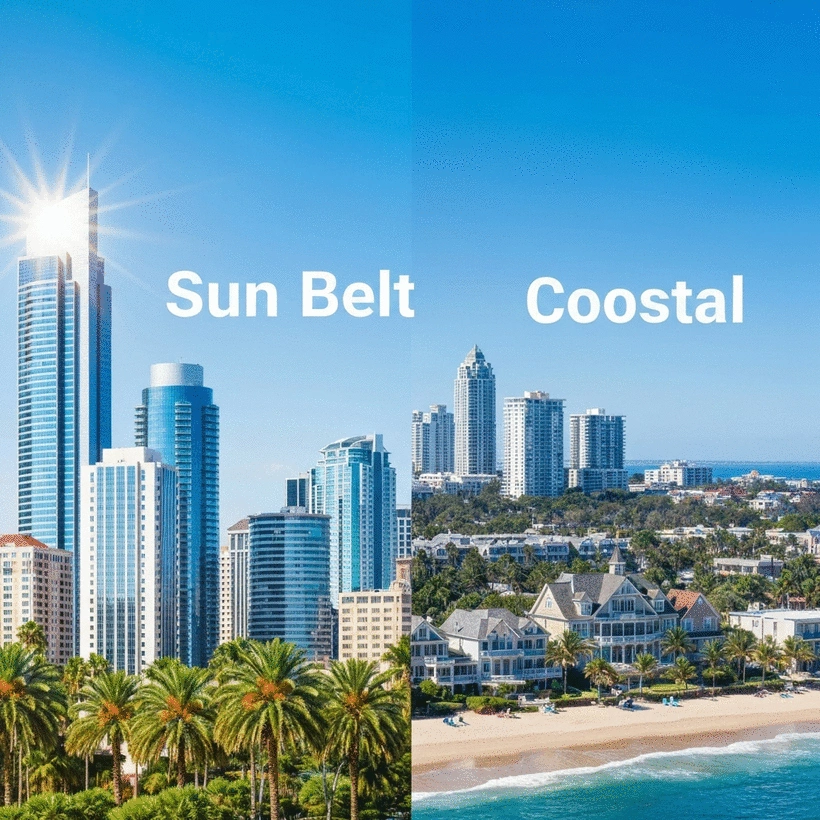
When it comes to urban property investment, the choice between the Sun Belt states and coastal cities is more than just a matter of preference; it’s about understanding the unique attributes each region offers. The Sun Belt, characterized by its warm climate and rapid population growth, presents an exciting landscape for investors. On the other hand, coastal cities, with their established infrastructure and cultural appeal, often provide stability and long-term appreciation.
As a real estate analyst at Urban Property Insights, I’ve witnessed firsthand how these two regions cater to different investor needs. Whether you’re seeking high returns through growth or a safer haven for wealth preservation, both areas have something valuable to offer.
Defining the Investment Landscape: Sun Belt vs. Coastal Cities
In defining the investment landscape, it’s crucial to consider factors like economic growth, lifestyle amenities, and future potential. Here’s a quick look at how the two regions compare:
- Sun Belt: Rapid population growth, affordable housing, and a strong job market.
- Coastal Cities: High demand for real estate, established cultural hubs, and premium property values.
Understanding these distinctions can empower you to make informed investment choices that align with your financial goals. Each region presents a distinct flavor of opportunity, catering to different investor profiles.
Key Market Drivers: Growth vs. Stability
Now, let's dive into what drives these markets. Both the Sun Belt and coastal cities have unique dynamics that impact their investment potential. Growth is often associated with the Sun Belt, while stability reigns in coastal areas.
Population Migration Trends and Demographic Growth
One of the most significant factors influencing investment potential is population migration trends. The Sun Belt has been a hotspot for newcomers, especially young professionals and families seeking a lower cost of living. This influx not only boosts property demand but also stimulates local economies. For example, recent data from the U.S. Census Bureau highlights significant population growth in the South and West, which includes much of the Sun Belt. Additionally, research from the National Association of Realtors details metropolitan migration patterns, further illustrating these shifts.
Conversely, coastal cities attract residents for their lifestyle offerings, which can lead to a more stable but less explosive growth pattern. Understanding these migration trends is key to identifying lucrative investment opportunities.
Income and Job Growth: A Comparative Overview
When analyzing the job market, the Sun Belt shines with its increasing opportunities in sectors like technology and healthcare. Job growth here has outpaced many coastal cities, making it an attractive destination for both new residents and investors.
In contrast, coastal cities often boast higher average salaries and a diverse job market. However, the job growth may not be as rapid as in the Sun Belt. This difference is important to consider when evaluating where to invest your resources.
Climate Change and Its Impact on Real Estate
As climate change becomes an increasingly pressing issue, it’s vital to assess its impact on property values and housing demand. Coastal cities face risks from rising sea levels and severe weather, which can lead to fluctuating property values. A Federal Reserve paper on climate change and financial stability underscores the importance of considering these environmental factors.
Meanwhile, the Sun Belt, while benefiting from a favorable climate, may also contend with challenges like water scarcity and temperatures that could affect long-term livability. Understanding these environmental factors can help you make more informed investment decisions.
Investment Strategies: Yield vs. Wealth Preservation
Now that we’ve set the stage by understanding the investment landscape, let’s explore the strategies best suited for each region. Investors are typically torn between chasing high yields and ensuring wealth preservation.
The Case for Growth: Sun Belt Real Estate Investments
The Sun Belt offers numerous opportunities for high returns, particularly in multifamily investments. With the ongoing population influx, demand for apartments and rental properties continues to soar.
Key strategies here include focusing on emerging neighborhoods and leveraging local market trends to maximize your investment’s growth potential. It’s an exciting time to consider properties in this dynamic region!
Long-Term Appreciation: Coastal City Investments
On the other hand, investing in coastal cities may be more about long-term appreciation. The stability of these markets encourages a wealth preservation mindset. Properties in desirable coastal locations often see steady value increases over time, making them a safe bet for investors looking for reliability.
As you evaluate your options, consider how each strategy aligns with your financial goals and risk tolerance.
Understanding Real Estate Investment Trusts (REITs) in Urban Markets
Another avenue to explore is Real Estate Investment Trusts (REITs), which can provide valuable exposure to both Sun Belt and coastal markets. These investment vehicles allow you to invest in a diversified portfolio of real estate without directly managing properties.
Whether you’re looking for growth or stability, REITs can be a flexible option that suits various investment strategies, making them worth considering for your portfolio.
Evaluating Risks: Supply, Regulation, and Market Conditions
As with any investment, understanding the risks is paramount. Both the Sun Belt and coastal cities come with their own set of challenges.
Understanding Supply Risks and Overbuilding Concerns
In rapidly growing markets like the Sun Belt, there’s a potential risk of overbuilding. It’s essential to keep an eye on supply levels and how they might affect property values.
In comparison, coastal cities may experience different supply constraints due to environmental regulations and limited land availability. Recognizing these risks can help you gauge the viability of your investment.
Regulatory Environments and Landlord-Friendly Policies
The regulatory landscapes also vary significantly. Many Sun Belt states have landlord-friendly policies that can benefit investors. In contrast, coastal cities may have more stringent regulations that could impact investment returns.
Being aware of these differences can guide your investment strategy, ensuring you navigate the legal landscape effectively.
Zoning Regulations and Their Impact on Property Development
Lastly, zoning regulations play a crucial role in shaping urban development. In some areas, zoning laws can facilitate growth, while in others, they may hinder development. Understanding local zoning regulations can be a powerful tool for investors aiming to capitalize on market opportunities.
Data-Driven Comparison: Side-by-Side Metrics
To make informed investment decisions, a data-driven approach is essential. Below, I’ve outlined key metrics that can guide your analysis:
- Cap Rates: Understanding the capitalization rates can help you evaluate potential returns.
- Vacancy Rates: Keeping an eye on vacancy rates will give insights into rental demand.
- Rent Growth: Analyzing rent growth trends can indicate future income potential.
These metrics are crucial when comparing the performance of different markets, allowing you to make sound investment choices.
Insurance Costs and Tax Burdens: A Financial Breakdown
Insurance costs and tax implications can vary widely between the Sun Belt and coastal cities. Generally, coastal properties might face higher insurance costs due to climate-related risks. Understanding these financial burdens is essential for calculating your overall investment returns.
By evaluating the total cost of ownership, you’ll be better equipped to determine which market aligns with your investment strategy.
Market Analysis: Understanding Economic Indicators
Finally, keeping track of key economic indicators will provide a clearer picture of how these markets are performing. Look at factors like employment rates, GDP growth, and local economic conditions to gauge market health.
By understanding these indicators, you’ll be well-positioned to make informed investment decisions in urban property.
Frequently Asked Questions (FAQs)
What are the primary advantages of investing in the Sun Belt?
Why might investors prefer coastal cities over the Sun Belt?
How do population migration trends impact real estate investment in these regions?
What role do REITs play in urban property investment?
What are some key risks to consider when investing in the Sun Belt?
How does climate change affect property values in coastal cities?
We Want to Hear From You!
What do you think about the investment dynamics between the Sun Belt and coastal cities? Share your thoughts below:
Making Informed Investment Decisions: Framework for Success
When it comes to urban property investment, having a clear framework can make all the difference. At Urban Property Insights, I believe that aligning your investment strategy with your personal goals is crucial for success. This involves considering your desired cash flow, potential for appreciation, and your risk tolerance. By tailoring your approach, you can make well-informed decisions that resonate with your financial objectives.
Start by asking yourself a few questions: What are my long-term financial goals? Am I looking for immediate cash flow, or do I prefer investments that appreciate over time? Understanding your priorities will help you narrow down your investment options. To aid in this process, here's a quick checklist:
- Define your investment horizon (short-term vs. long-term)
- Determine your risk tolerance (high, medium, low)
- Decide on the importance of cash flow vs. appreciation
- Research market conditions and trends
By following these steps, you can create a personalized investment strategy that works for you. Remember, real estate investment isn't one-size-fits-all; it's about finding the right fit for your goals!
Case Studies and Real-World Examples
Looking at real-world successes can provide valuable insights and inspiration. Here are a couple of notable case studies from both the Sun Belt and coastal cities that illustrate effective investment strategies:
- Sun Belt Success: A young couple invested in a multifamily property in Austin, Texas, leveraging the rapid population growth and job opportunities in the tech sector. Within three years, they saw property appreciation and cash flow increase, enabling them to reinvest their profits.
- Coastal City Triumph: An investor in Miami focused on a fixer-upper condo. By tapping into the influx of remote workers and retirees moving to the area, they turned the property into a successful short-term rental, leading to significant returns through rental income and long-term appreciation.
These examples demonstrate that with the right strategy and market understanding, urban property investment can yield impressive results. If you're considering your next steps, remember to learn from these stories and adapt their strategies to your unique circumstances.
Exploring the Role of Infrastructure Investment in Urban Development
Infrastructure plays a pivotal role in shaping the value of urban properties. Infrastructure investments, such as improved transportation, utilities, and public services, can significantly enhance the attractiveness of a location. Here’s why these projects are essential:
- Economic Growth: Enhanced infrastructure attracts businesses, which can lead to job creation and increased demand for housing.
- Property Appreciation: Areas with strong infrastructure often see a boost in property values, benefiting investors in the long run.
- Connectivity: Improved transportation links make urban areas more accessible, increasing their desirability for residents and investors alike.
As you evaluate potential investments, consider how local infrastructure projects could impact property values in your targeted area. Staying informed about upcoming developments can provide you with a competitive edge in the market!
Recap of Key Points
Here is a quick recap of the important points discussed in the article:
- Investment Landscape: The Sun Belt offers rapid growth and affordability, while coastal cities provide stability and cultural appeal.
- Market Drivers: Population migration to the Sun Belt is driving demand, whereas coastal areas attract residents for lifestyle and stability.
- Investment Strategies: Focus on high yields in the Sun Belt and long-term appreciation in coastal cities for wealth preservation.
- Evaluating Risks: Be aware of overbuilding in the Sun Belt and regulatory challenges in coastal cities that may affect returns.
- Data-Driven Decisions: Utilize metrics like cap rates, vacancy rates, and rent growth to inform your investment choices.