Understanding Commercial Warehouse 3D Scans
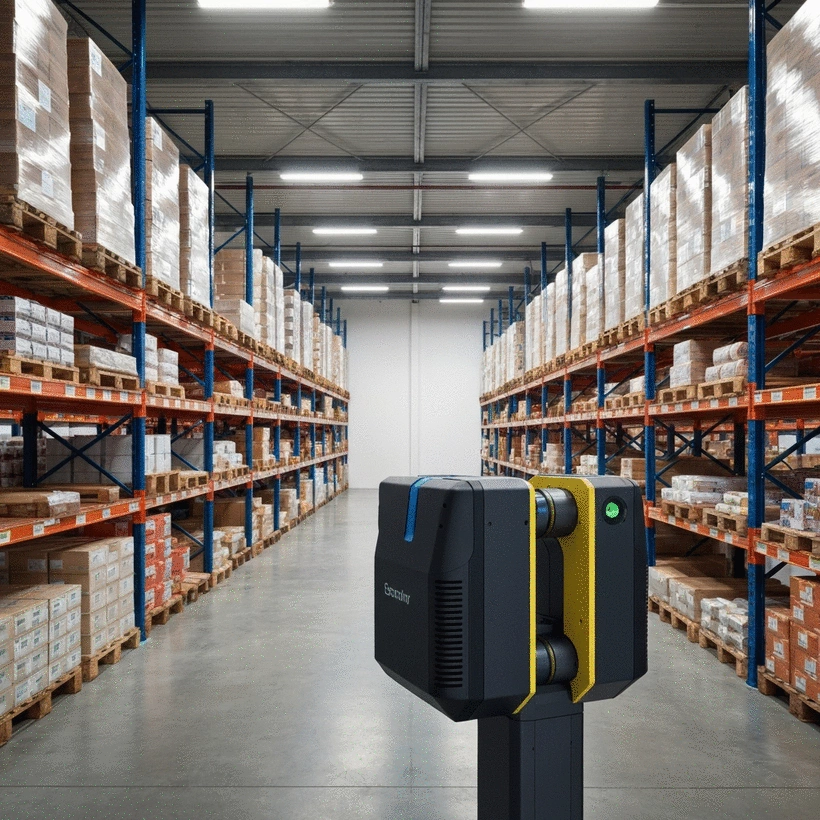
What if a single scan could revolutionize your warehouse operations? The advancements in commercial warehouse 3D scanning are not just a trend; they're transforming industries by providing detailed insights that enhance efficiency and reduce costs. Dive into the key lessons from this innovative technology and learn how it can reshape your warehousing strategy.
What You Will Learn
- Understanding the fundamentals of commercial warehouse 3D scanning and its applications.
- The critical role of LiDAR technology in achieving high-precision scans for better warehouse management.
- How 3D scanning can optimize warehouse layouts, leading to increased space efficiency and productivity.
- Integrating 3D scanning data with Warehouse Management Systems (WMS) to improve inventory tracking and operational visibility.
- Key steps to prepare for a successful 3D scanning project, from initial consultation to data processing.
- Evaluating service providers effectively with a clear checklist to ensure quality and reliability.
Warehouse 3D Scanning Benefits & Process
Commercial warehouse 3D scanning offers significant advantages for optimizing layouts, managing inventory, and streamlining operations. The process involves a structured approach from initial consultation to data delivery.
Benefits of 3D Scanning
3D Scanning Process Flow
Understanding Commercial Warehouse 3D Scanning
Let's dive into the world of a commercial warehouse 3D scan! This innovative technology is transforming how we approach warehousing by providing detailed, accurate digital representations of physical spaces. But what exactly does it entail, and how can it benefit your operations? Let’s explore this fascinating topic.
What is Commercial Warehouse 3D Scanning?
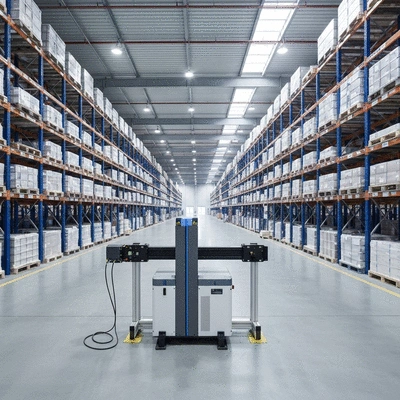
3D scanning is a non-invasive technology that captures the physical dimensions of a space and creates a digital replica. In the context of warehousing, it has various applications, including layout optimization, inventory management, and even facility design. This technology allows us to visualize spaces in a way that traditional methods simply can't achieve!
Defining 3D Scanning and Its Applications in Warehousing
At its core, 3D scanning involves using specialized equipment to gather spatial data and create a 3D model. In warehousing, this can streamline processes such as:
- Identifying optimal layouts for shelving and equipment.
- Facilitating accurate facility documentation for compliance.
- Improving safety audits with precise spatial data.
These applications empower businesses to make informed decisions that lead to increased efficiency and reduced operational costs.
Key Technologies Behind 3D Scanning: Laser and Mobile Mapping
Two key technologies power 3D scanning: laser scanning and mobile mapping. Laser scanning offers high precision by measuring the distance to surfaces using laser beams, while mobile mapping incorporates GPS technology to capture data on the move. This combination makes it possible to cover large spaces quickly and accurately!
The Role of LiDAR in Precision Scanning
One of the most significant advancements in 3D scanning is the use of LiDAR (Light Detection and Ranging). This technology enhances the precision of scans, making it a popular choice for warehouse applications. Here are some benefits of LiDAR:
- High accuracy in capturing complex geometries.
- Ability to scan in various conditions, including low light.
- Efficient data collection over large areas.
By leveraging LiDAR, warehouses can achieve a level of detail that supports better planning and management.
Why Use a 3D Scan for Your Warehouse?
Now that we understand what 3D scanning is, let’s discuss why you should consider implementing it in your warehouse. The benefits are substantial and can significantly impact your operations.
Benefits of 3D Scanning for Warehouse Layout Planning
One of the primary advantages of 3D scanning is its ability to assist with warehouse layout planning. By providing a clear visual representation of your space, you can:
- Identify inefficient use of space.
- Plan for future expansions or alterations.
- Optimize the placement of inventory and equipment.
This proactive approach can enhance your warehouse's functionality and productivity.
Integration with Warehouse Management Systems (WMS)
Another benefit of 3D scanning is its seamless integration with Warehouse Management Systems (WMS). By using 3D data, you can improve:
- Inventory tracking accuracy.
- Order fulfillment efficiency.
- Overall operational visibility.
When your WMS is powered by precise spatial data, it leads to better decision-making and streamlined operations.
Enhancing Inventory Management with 3D Scanning Technology
Lastly, 3D scanning technology can significantly enhance your inventory management processes. With accurate 3D models, warehouse operators can:
- Quickly assess stock levels.
- Identify slow-moving items and optimize stock levels.
- Reduce errors in inventory counts.
By utilizing this technology, you're not just improving efficiency but also enhancing customer satisfaction through faster and more accurate order processing.
Interactive Question
As you consider the benefits of 3D scanning technology for your warehouse, we'd love to hear your thoughts! What aspect of 3D scanning do you find most compelling?
Preparing for a Successful Warehouse 3D Scanning Project
Embarking on a warehouse 3D scanning project can feel overwhelming, but with the right preparation, you can streamline the process and maximize your results. Understanding what to expect during the scanning process is crucial for ensuring a successful outcome.
What to Expect During the Scanning Process
The scanning process involves several key steps that are essential to capture accurate and comprehensive data about your warehouse. Typically, the timeline for a project can vary based on the size and complexity of the space, but here are the main phases you can anticipate:
- Initial Consultation: Discuss project goals and scope with the scanning service provider.
- Site Assessment: A walkthrough to evaluate the warehouse and identify specific scanning needs.
- Scanning Execution: The actual scanning process, which may take several hours to days depending on complexity.
- Data Processing: Converting scan data into usable formats such as point clouds or 3D models.
- Delivery of Outputs: Receiving your final data and reports to integrate into your operations.
While the scanning process is straightforward, several challenges can arise when capturing large or complex spaces. Common issues include inconsistent lighting, obstructed views, and equipment limitations. By working closely with your provider, you can identify ways to overcome these challenges effectively.
Implementing Real-Time Monitoring for Scanning Projects
Real-time monitoring can significantly enhance your scanning project. By having on-site personnel or remote access during the scanning process, you can:
- Ensure the scan is proceeding as planned.
- Adjust settings or techniques if unexpected issues arise.
- Receive immediate feedback on data quality.
This proactive approach not only improves accuracy but also enhances communication with your scanning team, leading to a more efficient project overall.
Requesting Quotes and Evaluating Service Providers
When it comes time to request quotes for your warehouse scanning project, having a clear checklist can help you evaluate potential service providers effectively. Here’s what to consider:
- Experience with similar warehouse types and projects.
- Technology used for scanning—ensure they utilize the latest tools.
- Portfolio of past work, including examples of point clouds and 3D models.
- Customer reviews and testimonials for quality assurance.
- Pricing structure and what is included in their service.
Once you’ve gathered quotes, assess the deliverables you can expect. Key outputs to look for include point clouds, meshes, and Building Information Modeling (BIM) outputs, which will be integral in your future planning and design efforts.
Assessing Deliverables: Point Clouds, Meshes, and BIM Outputs
Understanding the different deliverables is vital to ensure they meet your project needs. Here’s a breakdown:
- Point Clouds: Raw data captured during the scan, representing the physical space.
- Meshes: Surface representations generated from point clouds, useful for visualizing structures.
- BIM Outputs: Detailed models integrating architectural data for ongoing facility management.
By keeping these deliverables in mind, you can better communicate your expectations and ensure your project aligns with your operational goals.
Frequently Asked Questions about Commercial Warehouse 3D Scanning
- What is commercial warehouse 3D scanning?
Commercial warehouse 3D scanning is a non-invasive technology that captures the physical dimensions of a warehouse space to create a detailed digital replica, used for layout optimization, inventory management, and facility design. - How does 3D scanning benefit warehouse operations?
3D scanning offers benefits such as optimizing warehouse layouts, providing accurate documentation, improving safety audits, enhancing inventory management, and streamlining operations through better spatial insights. - What technologies are used in 3D scanning?
Key technologies include laser scanning for high-precision measurements and mobile mapping, which integrates GPS for on-the-move data capture. LiDAR (Light Detection and Ranging) is particularly important for achieving high accuracy and efficient data collection. - Can 3D scanning integrate with Warehouse Management Systems (WMS)?
Yes, 3D scanning data can be seamlessly integrated with WMS to improve inventory tracking accuracy, enhance order fulfillment efficiency, and provide overall operational visibility. - What outputs can I expect from a 3D scanning project?
Typical deliverables include point clouds (raw spatial data), meshes (surface representations), and Building Information Modeling (BIM) outputs, which are detailed models useful for ongoing facility management and planning. - How do I choose a 3D scanning service provider?
When evaluating providers, consider their experience with similar warehouse projects, the technology they use, their portfolio of past work, customer reviews, and the clarity of their pricing structure and deliverables.
Recap of Key Points
Here is a quick recap of the important points discussed in the article:
- 3D scanning provides accurate digital representations of warehouse spaces, enhancing layout optimization and inventory management.
- Key technologies like laser scanning and LiDAR improve scanning precision and efficiency.
- 3D scanning facilitates integration with Warehouse Management Systems (WMS), boosting tracking accuracy and operational visibility.
- Understanding the scanning process and preparing effectively helps ensure successful project outcomes.
- Evaluating service providers based on experience, technology, and deliverables is crucial for project success.